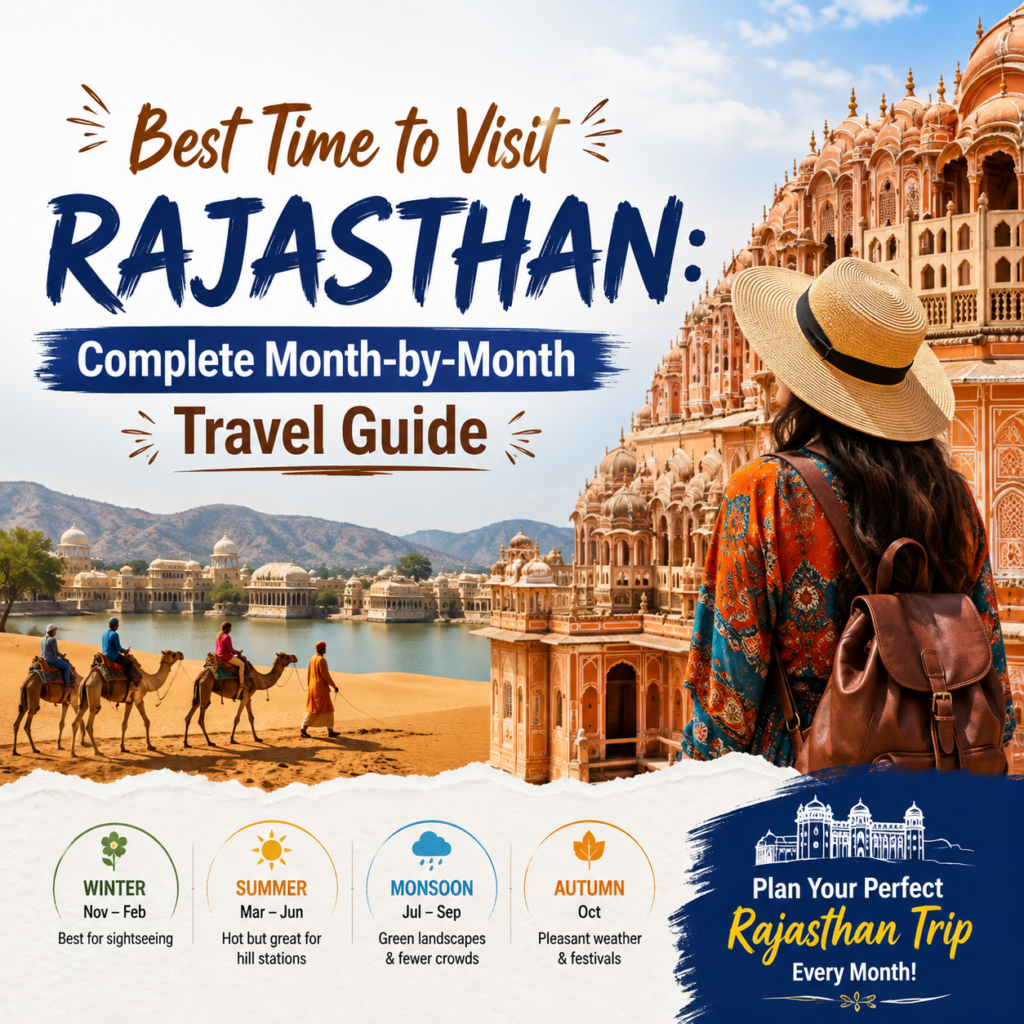
Best Time to Visit Rajasthan: Complete Month-by-Month Travel Guide
Best Time to Visit Rajasthan: Complete Month-by-Month Travel Guide
Rajasthan can be visited throughout the year, but the Best Time to Visit Rajasthan for most travelers is from October to March, when daytime conditions are generally more comfortable for sightseeing, cultural experiences, road trips, and outdoor activities. However, there is no single perfect month for every traveler. The right time depends on where you want to go, what you want to do, your budget, tolerance for heat, and whether you want to experience Rajasthan’s festivals or avoid busy tourist periods.
From the grand forts of Jaipur and Jodhpur to the serene lakes of Udaipur, the golden dunes of Jaisalmer, the cultural charm of Pushkar, and the wildlife of Ranthambore, each destination in Rajasthan offers a different experience depending on the season. Rajasthan’s official tourism guidance considers winter the most favorable season overall, while summer and monsoon can also be rewarding for specific destinations and travel preferences. If you’re planning a Rajasthan trip and need help selecting the right destinations, travel season, and itinerary, Rajasthan Tours N Travels can assist you in creating a journey tailored to your travel dates, budget, and preferred experiences.
What Is the Best Time to Visit Rajasthan?
For most first-time visitors, October to March is the best season to visit Rajasthan. The weather is generally more suitable for spending long hours outdoors, exploring forts and palaces, walking through old markets, taking road trips, and enjoying desert experiences.
Rajasthan Tourism describes winter as the state’s most favorable travel season, with many parts of the state experiencing relatively mild daytime temperatures. The official tourism department gives a broad winter range of around 10°C to 30°C, although temperatures can vary considerably between destinations and between daytime and nighttime.
Why October to March Is Popular
The biggest advantage is comfort. Rajasthan’s famous attractions are largely outdoor experiences, and pleasant daytime weather makes it easier to explore places such as Jaipur’s forts, Udaipur’s lakeside areas, Jodhpur’s historic sights, and Jaisalmer’s desert surroundings.
Winter is also an important period for Rajasthan’s cultural calendar. Festivals and events take place across the state during the cooler months, giving travelers opportunities to experience local traditions alongside sightseeing. Rajasthan Tourism specifically highlights events such as the Jaipur Literature Festival, Udaipur World Music Festival, Pushkar Fair, and Camel Fair during the winter period.
The trade-off is that this is also the Rajasthan tourist season. Popular destinations can become busier, and travelers should expect higher demand for accommodation and popular experiences compared with quieter periods.
Is October a Good Time to Visit Rajasthan?
Yes. October is an attractive transition month because the intense summer heat has eased and the monsoon season is coming to an end. It can be particularly appealing for travelers who want more comfortable sightseeing without waiting for the coldest part of winter.
Is Rajasthan Good to Visit in Summer?
Yes, but summer requires more planning. From April through June, Rajasthan can become extremely hot, with official tourism sources noting temperatures that can reach around 48°C in particularly hot areas. The Thar Desert region can be especially challenging during the hottest part of the day.
Summer is therefore not the best choice for travelers who want to spend entire days outdoors. However, it can suit budget-conscious travelers or those willing to plan sightseeing around cooler morning and evening hours.
Hillier destinations such as Mount Abu, along with Kumbhalgarh and Ranakpur, can be considered for a summer itinerary. Rajasthan Tourism specifically recommends these destinations as comparatively pleasant options during the hot season.
Is Rajasthan Worth Visiting During Monsoon?
Absolutely—especially if you prefer fewer crowds, greener landscapes, and a different side of Rajasthan.
The monsoon generally runs from July to September. Rainfall is uneven across the state: southeastern and eastern areas receive more rainfall than the arid northwest, partly because of Rajasthan’s geography and the influence of the Aravalli range.
Udaipur can be particularly appealing during this period because its lakes and surrounding landscapes take on a greener appearance. Bundi and Keoladeo National Park are also highlighted by Rajasthan’s tourism authorities as destinations worth considering during the monsoon.
The main disadvantage is unpredictability. Rain can affect road travel, outdoor sightseeing, and some planned activities, so flexibility is useful when traveling during this season.
Rajasthan Weather at a Glance
Rajasthan is a large state with significant regional variation, so temperatures and rainfall are not identical everywhere. For a broad travel-planning view, the seasons can be compared like this:
| Season | Months | Typical Weather | Travel Experience | Best Suited For | Main Drawback |
| Winter | October–March | Pleasant days, cool to cold nights | Excellent for sightseeing and outdoor activities | First-time visitors, sightseeing, desert trips, festivals | Higher tourist demand |
| Summer | April–June | Very hot and generally dry | Better with early-morning and evening plans | Budget travelers, selected hill destinations | Extreme daytime heat |
| Monsoon | July–September | Warm with rainfall; greener landscapes | Quieter and more scenic in suitable regions | Nature, photography, Udaipur, fewer crowds | Rain can disrupt plans |
| Post-monsoon | Around September–October | Temperatures begin becoming more comfortable | Good transition into the main travel season | Travelers seeking a balance of weather and crowds | Conditions vary by month and region |
Rajasthan Tourism’s current climate information gives broad temperature ranges of 10°C–27°C for January–March, 24°C–45°C for April–June, 21°C–35°C for July–September, and 13°C–30°C for October–December. These are state-level ranges, so individual destinations can differ significantly.
Rajasthan in Winter — October to March
Winter is widely considered the best season to visit Rajasthan, particularly for travelers planning a classic Rajasthan circuit.
During the day, temperatures are generally comfortable enough for extended sightseeing, while mornings and nights can become noticeably colder. The difference can be especially important in desert areas, where sunny daytime conditions can give way to chilly nights.
This makes winter particularly suitable for combining several experiences in one trip: exploring forts and palaces, visiting colorful markets, taking heritage walks, traveling between cities, and spending a night at a desert camp.
Why Winter Is Popular
Comfortable sightseeing: You can spend more time outdoors without dealing with peak summer heat.
Desert experiences: Cooler weather makes desert camping and dune-based activities considerably more comfortable than during the hottest months. Rajasthan Tourism recommends October to March for camping experiences in places such as Jaisalmer and Pushkar.
Festivals and events: Rajasthan’s winter calendar includes several well-known cultural events and fairs.
Better for multi-city trips: If your itinerary includes Jaipur, Jodhpur, Jaisalmer, Udaipur, Pushkar, and Ranthambore, the cooler season makes moving between destinations and spending time outdoors easier.
What to Keep in Mind
Winter is also the busiest period for Rajasthan tourism. Popular hotels, desert camps, and tours can experience greater demand, particularly around major festivals and holiday periods.
Pack layers rather than assuming Rajasthan will be warm throughout the day. Light clothing may be comfortable under the afternoon sun, while a warm layer can be useful during early mornings and evenings.
Best for: First-time visitors, sightseeing, desert experiences, photography, cultural trips, families, couples, and travelers who prefer comfortable outdoor conditions.
Rajasthan in Summer — April to June
Summer is Rajasthan’s most challenging travel season for many visitors. Temperatures can become extremely high, particularly across the western and desert regions. Rajasthan Tourism reports summer temperatures reaching as high as 48°C in some areas.
That doesn’t mean the entire state should be avoided, but it does mean your itinerary needs to change.
Instead of planning a full day of outdoor sightseeing, consider visiting major attractions in the early morning, taking a break during the hottest part of the afternoon, and going out again in the evening.
Can You Travel to Rajasthan in Summer?
Yes, if you are prepared for the heat.
Summer can appeal to travelers looking for a quieter experience or potentially lower-demand travel periods. It is also worth considering destinations such as Mount Abu, Kumbhalgarh, and Ranakpur, which Rajasthan Tourism identifies as more pleasant choices during summer.
If you travel during this season, lightweight clothing, sun protection, hydration, and sensible sightseeing hours become essential.
The hottest months are generally not ideal for travelers who want long desert excursions or extensive midday sightseeing.
Best for: Budget-conscious travelers, flexible itineraries, selected hill or elevated destinations, and visitors comfortable with intense heat.
Less suitable for: Travelers sensitive to high temperatures, extensive walking itineraries, and long daytime desert activities.
Rajasthan During Monsoon — July to September
Monsoon offers a very different Rajasthan travel experience.
Instead of the dry, sun-baked landscapes commonly associated with the state, rainfall can bring greenery, refreshed lakes, dramatic skies, and cooler conditions in many areas. The effect is especially noticeable in eastern and southeastern parts of Rajasthan, which receive more rainfall than the arid northwest.
For photographers and travelers who have already experienced Rajasthan during winter, monsoon can provide a fresh perspective.
Why Consider Rajasthan in Monsoon?
Fewer crowds: July to September is outside the traditional peak tourist season, making it attractive for travelers who prefer a quieter trip.
Beautiful landscapes: Rain can transform dry surroundings into greener scenery.
Udaipur becomes especially appealing: The city’s lakes and surrounding hills can look particularly atmospheric during and after rainfall.
Good for slow travel: Monsoon can work well for travelers who prefer scenic drives, relaxed hotel stays, photography, and exploring cities without the intensity of peak-season tourism.
What Are the Downsides?
Rain can make travel less predictable. Outdoor activities may need to be rescheduled, roads can become difficult during heavy rainfall, and travelers should leave some flexibility in their itinerary.
The experience also varies considerably by region. Western Rajasthan remains much drier than the eastern and southeastern parts of the state because of the state’s geography and rainfall patterns.
Best for: Photographers, repeat visitors, travelers seeking fewer crowds, nature lovers, and people interested in experiencing Udaipur and other greener parts of Rajasthan.
Which Season Is Right for You?
There isn’t one answer for every traveler. Use this quick guide to match the Rajasthan travel season with your priorities:
| Travel Goal | Recommended Season |
| Best overall | October to March |
| Best weather for sightseeing | November to February |
| Best for desert safari and camping | October to March |
| Best for festivals and cultural events | Mainly the winter season |
| Best for budget-conscious travel | Summer or monsoon, depending on destination and conditions |
| Best for fewer crowds | Monsoon and selected shoulder periods |
| Best for photography | Winter for clear sightseeing conditions; monsoon for greener landscapes |
| Best for wildlife | Depends on the specific reserve and its operating season |
The Simple Answer
If you are visiting Rajasthan for the first time and want the easiest all-round experience, October to March is the safest recommendation. For travelers who prioritize particularly comfortable sightseeing weather, the cooler part of winter is a strong choice.
But if your priority is lower crowds, a tighter budget, lush monsoon scenery, or a specific destination such as Mount Abu, the best month to visit Rajasthan may be different from the traditional peak season.
That is why looking at Rajasthan month by month is the next step: the ideal time can change significantly depending on whether you are planning a desert adventure, a city-focused trip, a wildlife experience, or a relaxed cultural holiday.
Rajasthan Month-by-Month Travel Guide
Choosing the right month can change the entire Rajasthan travel experience. The same fort, desert, lake, or market can feel completely different depending on the weather, crowds, and seasonal events. Rajasthan weather generally moves from cool and pleasant winter conditions to intense summer heat, followed by a warmer monsoon period and a gradual return to comfortable conditions toward October. Official Rajasthan Tourism data places the broad January–March range around 10°C–27°C, April–June around 24°C–45°C, July–September around 21°C–35°C, and October–December around 13°C–30°C.
The best months to visit Rajasthan ultimately depend on your priorities. A January trip may be ideal for desert camping, while July can offer a greener and quieter Udaipur. October can be attractive for travelers looking for improving weather and fewer peak-winter crowds. Here’s what to expect month by month.
Rajasthan in January
January is one of the coolest months in Rajasthan and a strong choice for travelers who want comfortable daytime sightseeing and classic winter experiences. Official tourism information notes that December and January can have a significant difference between daytime and nighttime temperatures, with some areas experiencing temperatures around 0°C or below.
For most travelers, daytime conditions are well suited to exploring forts, palaces, museums, markets, and historic neighborhoods. Early mornings and nights, however, can be distinctly cold, particularly in desert areas.
Best destinations: Jaipur, Jodhpur, Jaisalmer, Udaipur, Pushkar and Ranthambore.
Best activities: Fort and palace sightseeing, desert camping, camel experiences, wildlife safaris, photography and cultural tours.
January is also associated with winter events such as the Kite Festival around Makar Sankranti. Rajasthan Tourism lists the Jaipur Kite Festival as an annual January event.
Crowds: High, particularly around popular destinations and holiday periods.
Budget: Usually higher than the hotter off-season because winter is the main tourist period.
Verdict: Excellent for first-time visitors, especially if you want comfortable sightseeing and desert experiences. Carry warm layers for mornings and nights.
Rajasthan in February
February continues the comfortable winter travel period but gradually moves toward warmer daytime conditions. It is an excellent month for a multi-city Rajasthan itinerary because travelers can comfortably combine forts, palaces, markets, wildlife and desert experiences.
Jaisalmer is particularly attractive in February because cooler conditions make desert activities much more manageable than during the summer. Depending on the year’s calendar, the Jaisalmer Desert Festival also falls around this part of the year; travelers should check the official schedule before planning specifically around the event.
Best destinations: Jaisalmer, Jaipur, Udaipur, Jodhpur, Pushkar and Ranthambore.
Best activities: Desert safari, camping, heritage sightseeing, photography, road trips and cultural experiences.
Crowds: Moderate to high.
Budget: Generally peak-season pricing, although exact hotel and tour rates vary by destination and dates.
Advantages: Comfortable weather, excellent outdoor conditions and strong cultural-tourism opportunities.
Disadvantages: Popular attractions and accommodations can be busy.
Verdict: One of the strongest months for an all-round Rajasthan trip, particularly if desert travel is a priority.
Rajasthan in March
March is a transition month. The cool winter gradually gives way to warmer spring conditions, making the first part of the month generally more comfortable for extensive outdoor sightseeing than the later part.
It can be a particularly interesting time for cultural travelers because festivals such as Holi and Gangaur fall around this period, although their exact dates change according to the Hindu calendar. Rajasthan Tourism’s festival information lists Gangaur as a March–April celebration and Holi-related events during the spring period.
Best destinations: Jaipur, Udaipur, Jodhpur, Pushkar, Bharatpur and Ranthambore.
Best activities: Cultural sightseeing, photography, heritage walks, wildlife experiences and festival tourism.
Crowds: Moderate, with spikes around major festivals.
Budget: Often somewhat more flexible than the heart of winter, but festival dates can increase demand.
Advantages: Pleasant early-season conditions and opportunities to experience major cultural celebrations.
Disadvantages: Temperatures begin rising, particularly toward the end of the month.
Verdict: A very good shoulder-season choice, especially for travelers interested in Rajasthan’s festivals and cultural traditions.
Rajasthan in April
April marks the beginning of Rajasthan’s hot season. Official climate information places April–June in a broad temperature range of approximately 24°C–45°C statewide, although conditions vary significantly between destinations.
For sightseeing, timing becomes much more important. A morning visit to a fort or palace can be far more comfortable than walking around exposed areas during the afternoon. Plan indoor breaks during the hottest part of the day and resume outdoor activities later.
Mount Abu, Kumbhalgarh and Ranakpur can be more attractive alternatives for travelers trying to avoid the most intense heat. Rajasthan Tourism specifically highlights these destinations as relatively pleasant summer options.
Best destinations: Mount Abu, Kumbhalgarh, Ranakpur, Udaipur and selected hillier areas.
Best activities: Early-morning sightseeing, heritage visits, scenic drives and relaxed resort stays.
Crowds: Generally lower than winter.
Budget: Potentially more favorable, depending on destination and accommodation.
Advantages: Fewer peak-season crowds and opportunities for better flexibility.
Disadvantages: Afternoon heat can make long outdoor itineraries uncomfortable.
Verdict: Suitable for flexible travelers, but not ideal if your trip depends on extensive midday sightseeing.
Rajasthan in May
May is among the hottest months of the year and can be particularly demanding in western Rajasthan. Temperatures in some parts of the state can approach or exceed the mid-40s Celsius, while areas around the Thar Desert can experience especially harsh heat.
A May itinerary should be built around the weather rather than trying to ignore it. Start sightseeing early, take a midday break, stay hydrated, and plan evening activities once temperatures become more manageable.
This is not the month I’d recommend for a traveler whose dream Rajasthan experience involves spending long hours walking between forts or undertaking extended desert excursions.
Best destinations: Mount Abu, Kumbhalgarh, Ranakpur and selected Udaipur experiences.
Best activities: Early-morning sightseeing, scenic drives, indoor attractions and relaxed hotel or resort stays.
Crowds: Generally lower.
Budget: Can be attractive for travelers seeking an off-season trip, though prices depend on the property and destination.
Advantages: Quieter attractions and greater flexibility.
Disadvantages: Extreme heat, particularly in desert and western areas.
Verdict: Best suited to heat-tolerant and budget-conscious travelers, rather than first-time visitors seeking classic Rajasthan sightseeing conditions.
Rajasthan in June
June continues the intense summer period, although the month also represents a transition toward the monsoon. The weather can remain extremely hot, especially during the earlier part of the month.
Travelers visiting Rajasthan in June should prioritize practical planning: air-conditioned transportation, accommodations with suitable cooling facilities, early sightseeing and plenty of hydration.
The desert regions are generally not the easiest choice for daytime exploration during this period. Instead, destinations such as Mount Abu and Kumbhalgarh can provide a more comfortable alternative.
Best destinations: Mount Abu, Kumbhalgarh, Ranakpur and selected parts of Udaipur.
Best activities: Early-morning sightseeing, nature-oriented trips, scenic drives and relaxed cultural experiences.
Crowds: Low compared with the winter season.
Budget: Often favorable compared with peak winter, although prices vary.
Advantages: Fewer tourists and greater availability.
Disadvantages: Very high temperatures and limited comfort for daytime outdoor activities.
Verdict: A niche choice rather than the best month for a conventional Rajasthan tour. Choose June if budget, flexibility or specific destinations matter more than cool weather.
Rajasthan in July
July brings Rajasthan into the monsoon season. Temperatures become more manageable in many places, although humidity and rainfall become part of the travel equation. Official Rajasthan Tourism data places July–September in a broad 21°C–35°C range, with substantially higher rainfall than the preceding months.
The transformation can be particularly noticeable around lakes, hills and greener parts of the state. Udaipur is one of the most appealing choices for travelers who enjoy atmospheric landscapes, while Bundi and Keoladeo National Park are also highlighted by Rajasthan tourism authorities as monsoon destinations.
Best destinations: Udaipur, Bundi, Keoladeo National Park and parts of southeastern Rajasthan.
Best activities: Photography, scenic drives, relaxed sightseeing and enjoying lakeside landscapes.
Crowds: Generally lower than the winter peak.
Budget: Often more suitable for travelers looking for off-season options, subject to individual property pricing.
Advantages: Greener landscapes, fewer tourists and a distinctive side of Rajasthan.
Disadvantages: Rain can disrupt outdoor plans and road journeys.
Verdict: A good choice for photographers, repeat visitors and travelers who prefer quieter trips.
Rajasthan in August
August sits firmly within Rajasthan’s monsoon period. The state can look dramatically different from its dry-season image, with greener surroundings and rain-fed landscapes in areas that receive stronger monsoon rainfall.
Udaipur remains an appealing option for a monsoon-focused trip, particularly for travelers who enjoy lakes, hills and scenic views. However, rainfall patterns can vary substantially across Rajasthan, so don’t assume that every destination will have the same experience.
Best destinations: Udaipur, Bundi, Kota and other parts of eastern or southeastern Rajasthan.
Best activities: Photography, scenic sightseeing, relaxed city exploration and monsoon landscapes.
Crowds: Generally lower.
Budget: Often a good period for travelers seeking quieter travel, although prices are property-specific.
Advantages: Green scenery, atmospheric skies and fewer tourists.
Disadvantages: Rain can interfere with outdoor schedules and transportation.
Verdict: Best for travelers who enjoy monsoon scenery and flexible itineraries, rather than those looking for guaranteed dry weather.
Rajasthan in September
September is a transition period. Monsoon conditions can still be present, particularly during the earlier part of the month, but the state gradually begins moving toward the more comfortable travel period that follows.
This makes September interesting for travelers who want a quieter experience while avoiding the most intense summer heat. Conditions can vary considerably by region, so flexibility remains important.
Best destinations: Udaipur, Bundi, Kota and selected eastern and southeastern destinations.
Best activities: Photography, heritage sightseeing, scenic road trips and relaxed cultural exploration.
Crowds: Generally lower than the peak winter season.
Budget: Potentially more attractive than peak-season travel.
Advantages: Transitioning weather, fewer crowds and greener landscapes in suitable regions.
Disadvantages: Rain remains possible and conditions can be unpredictable.
Verdict: A good shoulder-season option for flexible travelers, particularly those who don’t mind occasional rain.
Rajasthan in October
October is one of the most interesting transition months for Rajasthan travel. As the monsoon retreats, conditions generally become drier and more comfortable, while the state begins moving toward its main tourist season.
It is a particularly useful month for travelers who want to explore several cities without committing to the busiest part of winter. The exact experience can vary between early and late October, so checking current local weather before departure is still sensible.
October also begins a strong festival period. Rajasthan Tourism lists events such as the Marwar Festival in Jodhpur during the September–October period, while several fairs and festivals take place during October and November.
Best destinations: Jaipur, Udaipur, Jodhpur, Pushkar, Jaisalmer and Ranthambore.
Best activities: Fort and palace sightseeing, road trips, photography, cultural experiences and increasingly comfortable desert activities.
Crowds: Moderate and generally rising toward the end of the month.
Budget: Often more flexible than peak winter, though festival periods can increase demand.
Advantages: Improving weather, cultural events and fewer peak-season crowds than later winter.
Disadvantages: Conditions can still be warm at times, particularly early in the month.
Verdict: An excellent transition month for travelers who want a balance between weather and crowds.
Rajasthan in November
November is firmly within the preferred travel season and is one of the strongest months for a classic Rajasthan itinerary.
Daytime conditions are generally comfortable for walking tours, forts, palaces and markets, while desert regions become much more suitable for camping and outdoor experiences.
November is also an important month for fairs and cultural events. The Pushkar Fair, for example, takes place annually between October and November, with the 2026 Rajasthan Tourism schedule listing it for November 17–24.
Best destinations: Pushkar, Jaipur, Jaisalmer, Jodhpur, Udaipur, Bikaner and Ranthambore.
Best activities: Desert safari, camping, heritage sightseeing, wildlife experiences, photography and festival tourism.
Crowds: Moderate to high, especially around major events.
Budget: Higher demand can affect accommodation availability and pricing.
Advantages: Comfortable weather, excellent outdoor conditions and a strong cultural calendar.
Disadvantages: Popular places can become busy, particularly around major festivals.
Verdict: One of the best months for an all-round Rajasthan trip, especially if you want good weather and desert experiences.
Rajasthan in December
December is peak winter and a favorite month for travelers who want comfortable daytime sightseeing combined with a classic cold-weather Rajasthan experience.
The contrast between day and night becomes especially important. Rajasthan Tourism notes that December and January can experience significant temperature variations, with some locations becoming extremely cold at night.
For desert camping, pack appropriately rather than assuming that the desert remains warm after sunset. During the day, however, the weather is generally well suited to exploring forts, palaces, markets and historic streets.
December also has a strong cultural calendar. Rajasthan Tourism’s 2026 schedule includes the Kumbhalgarh Festival, Ranakpur–Jawai Bandh Festival and Mount Abu Winter Festival during December.
Best destinations: Jaisalmer, Udaipur, Jaipur, Jodhpur, Kumbhalgarh, Mount Abu and Ranakpur.
Best activities: Desert camping, sightseeing, photography, festivals, road trips and cultural experiences.
Crowds: High, particularly toward the Christmas and New Year period.
Budget: Peak demand can make popular accommodation and tours more expensive.
Advantages: Comfortable sightseeing conditions, festivals and excellent desert weather during the day.
Disadvantages: Cold nights and higher demand.
Verdict: Excellent for first-time visitors and travelers seeking the classic winter Rajasthan experience.
Which Month Is Best for a Rajasthan Trip?
After looking at Rajasthan weather by month, there isn’t one perfect answer for everyone. Your ideal month depends on whether you value comfortable sightseeing, festivals, desert experiences, lower costs or fewer crowds.
| Travel Goal | Best Choice | Why |
| Best overall month | November | Comfortable weather, excellent sightseeing and strong cultural experiences |
| Best winter month | February | Pleasant conditions with excellent opportunities for sightseeing and desert travel |
| Best budget period | May–September | Lower tourist demand, although summer heat and monsoon conditions require flexibility |
| Best monsoon month | August | Green landscapes and a quieter travel atmosphere, especially in suitable regions |
| Best festival period | October–November | Major fairs and cultural events take place during this period |
| Best desert month | November–February | Cooler conditions make desert camping and outdoor activities much more comfortable |
For travelers asking for the best month to visit Rajasthan, November is an excellent all-round recommendation, while December, January and February are particularly strong for winter travel. October is attractive for a transition-season trip, and the monsoon months can work well if your priority is greenery, photography and fewer crowds.
The important takeaway is that Rajasthan does not have a single travel season that works equally well for everyone. Your destination and planned activities can change the answer—and that becomes especially important when comparing Jaipur, Udaipur, Jaisalmer, Jodhpur, Pushkar and Ranthambore.
Best Time to Visit Popular Rajasthan Destinations
Rajasthan is much more than one climate zone or one type of landscape. The dry desert around Jaisalmer, the lakes and hills around Udaipur, the Aravalli landscapes near Mount Abu and the wildlife areas around Ranthambore can all offer different experiences at different times of the year. That means the ideal travel period can change depending on your destination.
If your itinerary includes several cities, the broader Rajasthan travel season of October to March remains the easiest choice for most travelers. But if you are visiting only one or two destinations, you can often choose a less busy period and still have an excellent trip.
Best Time to Visit Jaipur
Best months: October to March
Jaipur is one of the easiest Rajasthan destinations to visit during the cooler months. Comfortable daytime conditions make it easier to explore Amber Fort, City Palace, Hawa Mahal, Jantar Mantar and the city’s historic markets without dealing with intense summer heat.
January and February are particularly attractive for sightseeing, while October and November offer a useful balance between improving weather and the later winter crowds.
Jaipur also has a strong festival calendar. The Kite Festival is traditionally associated with January, while Teej takes place during the monsoon season. Rajasthan Tourism’s current festival calendar also lists the Jaipur Literature Festival during the winter period.
Peak period: December to February, with additional spikes around major events and holidays.
Quieter alternative: July to September can work for travelers comfortable with monsoon conditions, although rain may affect outdoor plans.
Best experiences: Forts, palaces, markets, architecture, food and cultural festivals.
Travel tip: If visiting in summer, schedule Amber Fort and other outdoor attractions early in the morning and keep afternoons flexible.
Best Time to Visit Udaipur
Best months: October to March
Udaipur’s lakes, palaces and surrounding Aravalli hills give the city a slightly different seasonal character from the desert destinations of western Rajasthan.
Winter is excellent for exploring City Palace, Lake Pichola, Jagdish Temple, Sajjangarh and the city’s lakeside areas. The comfortable weather also makes sunset viewpoints and outdoor photography more enjoyable.
However, Udaipur is one of the Rajasthan destinations that can be particularly rewarding during the monsoon. Rain can refresh the surrounding hills and landscapes, while the city’s lakes provide a dramatic backdrop.
The Mewar Festival is traditionally held around March–April and can be an interesting reason to visit during the spring period. Rajasthan Tourism describes it as an important cultural celebration in Udaipur.
Peak period: November to February.
Quieter alternative: July to September for travelers who enjoy monsoon scenery and don’t mind rain.
Best experiences: Lake views, palace sightseeing, photography, cultural experiences and romantic getaways.
Travel tip: If your priority is clear, comfortable weather, choose winter. If you want atmospheric landscapes and fewer visitors, monsoon can be surprisingly appealing.
Best Time to Visit Jaisalmer
Best months: November to February
Jaisalmer is one destination where choosing the right season matters considerably. The Golden City sits in the Thar Desert, and summer temperatures can make prolonged outdoor activities uncomfortable.
November through February offers much more suitable conditions for exploring Jaisalmer Fort, Patwon Ki Haveli and the surrounding desert. The cooler season is also ideal for combining sightseeing in the city with a desert safari or overnight camp.
The Jaisalmer Desert Festival generally takes place around January–February. Rajasthan Tourism describes it as a three-day celebration featuring folk performances, camel-related events, cultural activities and traditional competitions.
Peak period: December to February, particularly around the Desert Festival.
Quieter alternative: October and early November can offer improving weather before the busiest winter period.
Best experiences: Desert safari, camel rides, dune experiences, camping, photography and heritage sightseeing.
Travel tip: Desert nights can be surprisingly cold during winter, so pack warm layers even if daytime temperatures feel comfortable.
Best Time to Visit Jodhpur
Best months: October to March
Jodhpur’s famous Mehrangarh Fort, blue neighborhoods and historic streets are best explored when daytime temperatures are manageable.
October can be an attractive transition month, while November through February generally provides more comfortable conditions for walking tours and outdoor sightseeing.
Jodhpur’s Marwar Festival is traditionally held around September–October and celebrates the music, culture and heritage of the Marwar region. The exact dates can change each year, so travelers planning specifically around the festival should check the official Rajasthan Tourism schedule.
Peak period: November to February.
Quieter alternative: September or October, depending on current weather and festival dates.
Best experiences: Mehrangarh Fort, Jaswant Thada, old-city walks, markets, photography and cultural events.
Travel tip: Jodhpur can still feel warm in early autumn, so plan extensive walking for mornings and late afternoons if visiting during the transition season.
Best Time to Visit Pushkar
Best months: October to March
Pushkar combines spiritual tourism, lakeside experiences, temples and one of Rajasthan’s most famous annual fairs.
The Pushkar Camel Fair is held annually between October and November. Rajasthan Tourism describes it as a major camel and livestock fair that has also become a significant tourist attraction, drawing visitors for competitions, cultural activities and the atmosphere surrounding the fair.
For travelers who want to experience Pushkar without the major fair crowds, November through March can still offer comfortable conditions for exploring the town and its surroundings.
Peak period: Around the Pushkar Fair and during the winter season.
Quieter alternative: December through March, outside major event periods.
Best experiences: Pushkar Lake, temples, markets, cultural experiences and the Camel Fair.
Travel tip: If you plan to attend the fair, reserve accommodation well in advance because demand can rise substantially around the event.
Best Time to Visit Mount Abu
Best months: October to March for comfortable sightseeing; May for a summer escape
Mount Abu is different from much of Rajasthan because it is a hill station in the Aravalli Range. That makes it a useful alternative when much of the state is experiencing intense summer heat.
Summer can actually be a meaningful time to visit Mount Abu if you want to escape the hotter plains and desert regions. Rajasthan Tourism also identifies Mount Abu as a comparatively pleasant summer destination.
Winter brings cooler conditions and is attractive for travelers who enjoy the hill-station atmosphere, viewpoints and outdoor exploration.
Peak period: Winter holidays and selected summer periods.
Quieter alternative: Shoulder periods outside major holidays.
Best experiences: Nakki Lake, viewpoints, Dilwara Temples, nature walks and scenic drives.
Travel tip: Don’t judge Mount Abu’s weather solely by conditions in Jaipur or Jaisalmer. Its elevation gives it a noticeably different climate.
Best Time to Visit Ranthambore
Best months: October to April, with wildlife viewing considerations
Ranthambore is primarily an experience-driven destination rather than a conventional fort-and-market stop. The main attraction is wildlife, particularly the opportunity to observe tigers and other species in their natural habitat.
The cooler months are generally more comfortable for safari travel, especially for visitors combining wildlife drives with other Rajasthan destinations.
Summer can also have a particular advantage for wildlife viewing because animals may spend more time around available water sources, but the heat can be intense. Safari conditions and park access are seasonal, so travelers should verify current operating schedules and safari availability before booking.
Peak period: Winter and popular holiday periods.
Quieter alternative: Shoulder periods, depending on safari availability.
Best experiences: Wildlife safaris, Ranthambore Fort and nature photography.
Travel tip: Don’t choose a safari date based only on temperature. Check the current park operating season, safari zones and booking availability before finalizing your itinerary.
Best Time to Visit Bikaner
Best months: October to March
Bikaner is another desert-region destination where winter is much more comfortable than summer. The city is known for Junagarh Fort, historic havelis, local food and camel-related experiences.
January can be particularly interesting for travelers interested in camel culture because Bikaner hosts its annual Camel Festival around that period. Rajasthan Tourism’s festival calendar places the Bikaner Camel Festival in January.
Peak period: December to February.
Quieter alternative: October and March, when conditions can still be suitable for sightseeing.
Best experiences: Junagarh Fort, havelis, local cuisine, cultural events and camel experiences.
Travel tip: Winter mornings and nights can be cold, so carry layers even though Bikaner is associated with desert heat.
Best Time to Visit Rajasthan for Different Experiences
The ideal month changes considerably when you plan your trip around a particular activity rather than simply sightseeing.
Best Time for a Rajasthan Desert Safari
Recommendation: November to February
The cooler winter months are generally the most comfortable period for spending time in Rajasthan’s desert landscapes. This is particularly important because desert activities can involve prolonged exposure to the sun during the day and significantly cooler temperatures after sunset.
Jaisalmer is the main destination for this experience, with desert excursions commonly combining dune landscapes, camel experiences, sunset views and cultural performances.
Best for: Travelers who want a classic Thar Desert experience without the extreme summer heat.
Best Time for Desert Camping in Jaisalmer
Recommendation: November to February
Winter provides the most comfortable balance between daytime desert activities and nighttime camping.
A major attraction of desert camping is the contrast between the warm desert afternoon and the cooler night sky. During winter, however, nights can become genuinely cold, so warm clothing is important.
If you are planning your trip around the Jaisalmer Desert Festival, check the official annual schedule because the event is generally held around January–February and dates vary by year.
Best for: Couples, families, photographers and travelers looking for an overnight desert experience.
Best Time for Wildlife Safari in Rajasthan
Recommendation: October to April, subject to individual reserve schedules
Rajasthan’s wildlife experiences require a slightly different approach to seasonality. Cooler months make safari drives more comfortable, while warmer periods can sometimes create interesting wildlife-viewing conditions.
Ranthambore is the most famous choice for many visitors, but travelers should check the current operating season, safari zones and booking rules before making plans.
Best for: Wildlife enthusiasts, photographers and travelers adding a safari to a larger Rajasthan itinerary.
Best Time for Exploring Forts and Palaces
Recommendation: November to February
Rajasthan’s forts and palaces are among its biggest attractions, but many involve substantial walking and outdoor exposure.
Cooler winter weather makes it easier to spend several hours exploring large complexes such as Amber Fort, Mehrangarh Fort, Chittorgarh Fort and Kumbhalgarh without the intense heat experienced during late spring and summer.
October and March can also be good choices if you prefer shoulder-season travel.
Best for: First-time visitors, history lovers, photographers and cultural travelers.
Best Time for a Rajasthan Road Trip
Recommendation: October to March
A road trip becomes much more comfortable when temperatures are moderate, especially if your route connects multiple cities.
Winter is particularly useful for itineraries covering Jaipur, Pushkar, Jodhpur, Jaisalmer and Udaipur because you can combine long drives with outdoor sightseeing.
For a summer road trip, distances and heat need to be taken seriously. Keep driving schedules flexible and avoid unnecessary midday outdoor stops.
Best for: Couples, families, photographers and travelers who want to explore beyond the major cities.
Best Time for Photography
Recommendation: November to February for comfortable travel; July to September for monsoon landscapes
There are actually two excellent photography seasons, depending on what you want to capture.
Winter offers clearer sightseeing conditions, comfortable walking weather and excellent opportunities for architecture, portraits, desert landscapes and city photography.
Monsoon creates a completely different visual character, especially around Udaipur and the greener parts of southern and southeastern Rajasthan.
Best for: Travel photographers, content creators and travelers prioritizing landscapes and architecture.
Best Time for a Rajasthan Honeymoon
Recommendation: October to March
Couples generally benefit from the cooler weather because it allows more flexibility for sightseeing, romantic dinners, sunset experiences and road trips.
Udaipur is particularly appealing for couples interested in lakeside views and palace experiences, while Jaisalmer offers a contrasting desert setting.
For a quieter honeymoon, consider shoulder periods rather than major holidays and festival dates.
Best for: Couples combining Udaipur, Jodhpur, Jaisalmer and Jaipur.
Best Time for a Family Trip to Rajasthan
Recommendation: November to February
Families with children or older travelers usually benefit from avoiding Rajasthan’s most intense heat.
Winter allows families to spend more time outdoors without constantly rearranging their itinerary around extreme afternoon temperatures. Jaipur, Udaipur, Jodhpur and Pushkar can be combined comfortably, while Jaisalmer adds a distinctive desert experience.
Families traveling during peak winter should book accommodations and major experiences ahead of time, especially if the trip overlaps with school holidays.
Best for: Families who want comfortable sightseeing and a balanced itinerary.
Best Time to Visit Rajasthan for Festivals and Events
Rajasthan’s festivals can turn a normal sightseeing trip into a much more immersive cultural experience. However, festivals also bring additional visitors, so anyone planning around a major event should check the official schedule and accommodation availability before booking.
Pushkar Camel Fair
Typical period: October–November
The Pushkar Camel Fair is one of Rajasthan’s most recognizable events. It combines a traditional livestock and camel fair with cultural activities, competitions and tourism experiences.
Rajasthan Tourism confirms that the fair is held annually between October and November.
Why visit: For camel culture, photography, local traditions and a lively festival atmosphere.
Planning note: Expect increased demand around the event.
Diwali
Typical period: October–November
Diwali follows the Hindu lunar calendar, so the date changes each year. Across Rajasthan, the festival brings illuminated streets, decorated homes, markets and special celebrations.
Jaipur, Udaipur and Jodhpur can be particularly atmospheric during the festival period.
Why visit: For illuminated architecture, markets, cultural celebrations and festive food.
Planning note: Confirm the year’s dates before booking and expect increased travel demand around the holiday period.
Holi
Typical period: February–March
Holi marks the arrival of spring and is celebrated across Rajasthan with colors, music and community celebrations. The exact date changes each year.
Jaipur and other destinations can offer organized celebrations, while places such as Bharatpur are also associated with Holi-related traditions. Rajasthan Tourism lists Braj Holi and Dhulandi among its festival events.
Why visit: For cultural immersion, photography and festive experiences.
Planning note: Travelers should research the specific celebration they want to attend and understand local customs.
Gangaur
Typical period: March–April
Gangaur is one of Rajasthan’s important traditional festivals and is particularly associated with women, devotion, music, colorful processions and local customs.
Rajasthan Tourism describes Gangaur as a March–April celebration, with Jaipur among the locations known for its traditional procession.
Why visit: For experiencing traditional Rajasthani culture beyond the usual tourist attractions.
Planning note: Dates vary according to the Hindu calendar.
Teej
Typical period: July–August
Teej is associated with the monsoon season and is especially prominent in Jaipur. The festival celebrates the arrival of the monsoon with traditional dress, music, dancing, swings, rituals and cultural processions.
Rajasthan Tourism’s current information describes the Jaipur Teej celebrations and their connection with the monsoon season.
Why visit: For colorful cultural celebrations and a different side of Jaipur during the monsoon.
Planning note: Monsoon weather can affect outdoor schedules.
Jaisalmer Desert Festival
Typical period: January–February
The Jaisalmer Desert Festival brings Rajasthani folk culture to the Thar Desert through music, dance, camel events, traditional competitions and cultural performances.
Rajasthan Tourism’s multi-year festival schedule places the event around January–February, with dates changing from year to year.
Why visit: For combining a desert trip with an organized cultural celebration.
Planning note: Festival dates can increase demand for accommodation and desert camps.
Jaipur Literature Festival
Typical period: January–February
The Jaipur Literature Festival attracts writers, readers and speakers from around the world and adds a literary dimension to a winter Rajasthan itinerary.
Rajasthan Tourism’s current festival calendar lists the event during the winter period.
Why visit: For literature, discussions, cultural programming and an international creative atmosphere.
Planning note: Book early if the festival is the main reason for your Jaipur visit.
Cheapest Time to Visit Rajasthan
The cheapest time to visit Rajasthan isn’t a fixed month for every city or hotel. Prices respond to demand, holidays, festivals, room availability and the type of property you choose.
Broadly, Rajasthan can be divided into three travel-demand periods.
Peak Season: October to March
This is when comfortable weather attracts the largest number of leisure travelers. Popular cities and desert destinations can see stronger accommodation demand, particularly around Christmas, New Year, major festivals and school holidays.
If you are traveling during peak winter, advance booking is sensible.
Shoulder Season: Around September–October and March
Shoulder periods can offer a useful balance between weather and demand, although conditions vary considerably from one month to another.
October can be a particularly useful transition period as the monsoon retreats and temperatures become more comfortable. March can also work well before the hotter months arrive.
Off-Season: Mainly Summer and Monsoon
April through June brings intense heat, while July through September brings monsoon conditions. These periods generally attract fewer leisure tourists than winter, which can create more flexibility in accommodation and travel planning.
However, don’t assume every hotel automatically becomes cheap. Premium properties, weekend demand and local events can still influence prices.
Budget strategy: If you can tolerate heat or occasional rain, consider traveling outside the winter peak, compare multiple accommodation options, and avoid major festival and holiday periods when possible.
When Is Rajasthan Most Crowded?
Rajasthan’s peak season generally overlaps with the cooler months, particularly from November through February.
The busiest periods are not necessarily consistent across the entire state. Jaipur can become particularly busy around major cultural events, Pushkar sees a major increase in visitors during the Camel Fair, and Jaisalmer experiences strong demand during the winter desert season and around its Desert Festival.
Christmas and New Year can also increase demand in popular tourist cities.
How to Avoid the Biggest Crowds
You don’t necessarily need to avoid winter altogether. Instead:
- Travel during October or March when conditions can still be favorable.
- Visit major attractions early in the morning.
- Choose weekdays for popular sightseeing spots where practical.
- Avoid booking accommodation directly around major festivals unless the event is your main reason for traveling.
- Consider lesser-known destinations alongside Jaipur, Udaipur, Jodhpur and Jaisalmer.
- Book popular desert camps and hotels early if traveling during peak winter.
This approach lets you enjoy the favorable Rajasthan travel season without making your entire trip revolve around the busiest periods.
Is Rajasthan Worth Visiting in the Off-Season?
Yes—but only if you choose the season and destination according to your travel priorities.
The Rajasthan off season can offer advantages that winter cannot: fewer tourists, greater flexibility and potentially better-value accommodation. But the trade-off is that you need to accept either extreme heat or unpredictable rainfall.
Traveling in Summer
Advantages:
- Fewer tourists at many attractions
- More flexibility when planning
- Potentially better value at some properties
- Mount Abu and selected Aravalli destinations can provide a different experience
Disadvantages:
- Very high daytime temperatures
- Outdoor sightseeing becomes tiring
- Desert activities are less comfortable
- Midday travel requires careful planning
Summer is therefore better suited to travelers who are comfortable adapting their schedules around the heat.
Traveling During Monsoon
Advantages:
- Greener landscapes in suitable regions
- Fewer tourists than peak winter
- Atmospheric photography
- Udaipur and parts of southern/eastern Rajasthan can be particularly attractive
- Cultural events such as Teej add seasonal character
Disadvantages:
- Rain can disrupt outdoor activities
- Road journeys may require flexibility
- Humidity can make some days uncomfortable
- Weather can vary considerably between regions
Monsoon is especially appealing if you’ve already experienced Rajasthan during winter and want to see a greener, quieter version of the state.
The Bottom Line on Off-Season Travel
Off-season travel isn’t automatically better or worse. It simply requires a different style of planning.
If your priority is comfortable sightseeing, desert camping and a first-time Rajasthan experience, winter remains the easiest choice. If your priority is budget, fewer crowds, photography or seasonal landscapes, summer and monsoon can each make sense under the right conditions.
The smartest approach is to choose your travel month based on what you want to experience, rather than assuming that the same season is ideal for every destination in Rajasthan.
Which Months Should You Avoid Visiting Rajasthan?
There is no single month that every traveler should avoid. The right decision depends on your heat tolerance, destination, planned activities, budget, and preferred travel style.
For most first-time visitors, April, May and June require the most careful planning because temperatures can become extremely high, particularly in western and desert regions. Long walks through forts, midday sightseeing and extended desert activities can become uncomfortable. If you travel during these months, plan outdoor activities for early morning or late afternoon and choose destinations such as Mount Abu or parts of the Aravalli region when appropriate.
Monsoon, from roughly July to September, is different. Rain can affect road journeys and outdoor plans, but it can also bring greener landscapes, fewer visitors and a particularly attractive atmosphere to destinations such as Udaipur. Travelers who prefer photography, quieter attractions and flexible itineraries may actually prefer this period.
Rather than asking which months to avoid completely, ask which months best match your Rajasthan itinerary and travel priorities.
What to Pack for Rajasthan by Season
Packing for Rajasthan requires more than simply preparing for hot weather. Temperatures can change significantly between day and night, particularly in desert regions, while monsoon travel requires protection from rain and humidity.
| Season | What to Pack | Why |
| Winter — October to March | Comfortable walking shoes, light layers, sweaters or jackets, warm clothing, sunglasses, sunscreen | Days can be comfortable while mornings and nights may become quite cold, especially in desert areas |
| Summer — April to June | Lightweight breathable clothing, comfortable shoes, hat/cap, sunglasses, sunscreen, reusable water bottle | High daytime temperatures make sun protection, hydration and breathable clothing essential |
| Monsoon — July to September | Light clothing, comfortable shoes with good grip, compact umbrella or rain jacket, waterproof bag, quick-drying clothes | Rain and wet surfaces can affect outdoor sightseeing and transportation |
Regardless of season, comfortable walking shoes are one of the most useful things to pack. Rajasthan sightseeing often involves forts, palace complexes, markets, temples and uneven historic streets.
If Jaisalmer or another desert destination is part of your itinerary, don’t rely only on summer-style clothing. Desert temperatures can fall considerably after sunset during winter, so warm layers are important for overnight camping.
Rajasthan Travel Tips for Every Season
Good Rajasthan travel planning is less about finding a perfect date and more about adapting your itinerary to the conditions.
Plan Sightseeing Around the Weather
During winter, you can generally make better use of the daytime for outdoor attractions. In summer, shift major sightseeing to early morning and late afternoon, leaving the hottest part of the day for indoor attractions, meals or rest.
During monsoon, keep some flexibility in case rain affects outdoor activities.
Stay Hydrated
Carry a reusable water bottle and drink regularly, especially during warmer months. Hydration becomes particularly important when walking through large forts, markets and outdoor archaeological sites.
Protect Yourself From the Sun
Sunscreen, sunglasses and a hat or cap are useful throughout much of the year. Don’t assume that comfortable winter temperatures mean the sun is harmless during a full day outdoors.
Dress for the Season and Destination
Light, breathable clothing works well in summer, while winter travelers should use layers so they can adjust throughout the day.
When visiting temples, religious sites or traditional communities, modest clothing is also a practical choice out of respect for local customs.
Book Ahead During Peak Season
If your Rajasthan trip falls between November and February, or around major festivals, book popular hotels, desert camps and other high-demand experiences ahead of time.
This is particularly important for Jaisalmer during the winter desert season and Pushkar around the Camel Fair.
Check Festival Schedules Before Booking
Festival dates can change from year to year because many events follow lunar or religious calendars. Always check the current official schedule before building your entire Rajasthan itinerary around a festival.
Consider Transportation Carefully
Rajasthan is a large state, and a multi-city itinerary can involve substantial travel between destinations.
For road trips, avoid packing too many destinations into a short schedule. In summer, long daytime journeys can be particularly tiring. During monsoon, allow additional flexibility in case weather affects road conditions.
Prepare for Desert Temperature Changes
The desert can feel very different after sunset. Even when the afternoon is warm, winter nights in Jaisalmer and other desert areas can be cold.
If you’re planning Jaisalmer desert camping, pack according to nighttime conditions rather than only checking the daytime forecast.
Frequently Asked Questions About the Best Time to Visit Rajasthan
1. What is the best month to visit Rajasthan?
November is one of the best all-round choices. The weather is generally comfortable for sightseeing, desert experiences and road trips, while the state also has a strong festival and cultural calendar.
December, January and February are also excellent, although popular destinations can be busier.
2. Which season is best for a Rajasthan trip?
Winter, broadly October to March, is the best season to visit Rajasthan for most travelers.
It provides more comfortable conditions for forts, palaces, markets, road trips and desert activities. However, summer can work for budget-focused travelers, while monsoon offers a quieter and greener experience in suitable parts of the state.
3. Is October a good time to visit Rajasthan?
Yes. October is a useful transition month as monsoon conditions generally begin giving way to drier weather and the main travel season approaches.
Early October can still feel warm or experience occasional rain depending on the region, so check the local forecast before traveling.
4. Is November a good month for Rajasthan?
Yes. November is particularly strong for a classic Rajasthan trip. Temperatures are generally comfortable, making it easier to explore forts, palaces and markets and participate in outdoor activities.
It is also an important month for events such as the Pushkar Camel Fair, depending on the year’s calendar.
5. Is December too cold for Rajasthan?
Usually, no. December is generally comfortable for daytime sightseeing, but nights and early mornings can become quite cold, especially in desert areas.
If you’re camping in Jaisalmer, pack warm layers rather than assuming desert weather means consistently hot temperatures.
6. Can I visit Rajasthan in summer?
Yes, but you need to plan around the heat.
April, May and June can be extremely hot, particularly in western Rajasthan. Early-morning and evening sightseeing, air-conditioned transportation and carefully selected destinations can make a summer trip more manageable.
Mount Abu, Kumbhalgarh and Ranakpur can be considered when designing a summer itinerary.
7. Is Rajasthan worth visiting during monsoon?
Yes, particularly if you enjoy fewer crowds, photography and greener landscapes.
Udaipur and parts of eastern and southeastern Rajasthan can be especially attractive during the rainy season. The downside is that rainfall can make outdoor activities and road travel less predictable.
8. Which month is best for a Jaisalmer desert safari?
November through February is generally the most comfortable period for a Jaisalmer desert safari.
The cooler weather makes spending time in the dunes, enjoying sunset experiences and staying overnight at a desert camp much more comfortable than during the hottest months.
9. What is the best time to visit Udaipur?
October to March is the safest recommendation for comfortable sightseeing, especially if you want to explore palaces, lakes and viewpoints.
However, Udaipur can also be appealing during monsoon because rainfall can enhance the surrounding hills and lake scenery.
10. What is the cheapest time to visit Rajasthan?
There is no guaranteed cheapest month across every hotel and destination, but summer and monsoon are generally outside the main winter tourist season and can offer more budget flexibility.
Actual prices depend on hotel category, local events, holidays, weekends and availability, so compare accommodation before booking.
11. What is the best time for a Rajasthan honeymoon?
October to March is generally the easiest period for a Rajasthan honeymoon because couples can comfortably combine sightseeing with relaxed evenings and road trips.
Udaipur is particularly popular for its lakes and palace settings, while Jaisalmer provides a contrasting desert experience.
For fewer crowds, consider shoulder periods and avoid major festival dates if privacy is your priority.
12. How many days are enough for a Rajasthan trip?
For a first Rajasthan itinerary, 7 to 10 days can provide a useful balance between major destinations and travel time.
A shorter trip could focus on Jaipur, Jodhpur and Udaipur, while a longer itinerary can add Jaisalmer, Pushkar, Ranthambore or other destinations.
The important thing is not to add too many cities simply to increase the destination count. Rajasthan is large, and allowing enough time for each place usually creates a better travel experience.
Final Verdict: What Is the Best Time to Visit Rajasthan?
After considering Rajasthan weather, destinations, activities, festivals, crowds and budgets, the answer becomes much clearer.
| Travel Priority | Recommended Period | Why |
| Best overall | November | Comfortable conditions and excellent opportunities for sightseeing |
| Best for comfortable weather | November–February | Cooler conditions make outdoor activities easier |
| Best for desert experiences | November–February | More comfortable conditions for safaris and desert camping |
| Best for festivals | October–March | Major cultural events and fairs occur throughout the cooler season |
| Best for budget travelers | May–September | Outside the main winter tourism period, although weather requires planning |
| Best for fewer crowds | July–September | Monsoon is generally quieter than the winter peak |
| Best for monsoon scenery | July–September | Rain can bring greener landscapes and atmospheric views |
So, What Is the Best Time to Visit Rajasthan?
For a first-time Rajasthan trip, October to March is generally the safest overall recommendation, with November through February offering particularly comfortable conditions for most travelers.
Choose November or February if you want a strong balance of weather and outdoor experiences. Choose December or January for classic winter travel and desert experiences. Consider October or March if you prefer a transition period.
If your priority is budget or fewer tourists, don’t automatically dismiss summer and monsoon. April to June can work with careful heat management, while July to September can be rewarding for travelers interested in greener landscapes and quieter destinations.
Ultimately, the best choice depends on the Rajasthan itinerary you want to create. Jaipur, Udaipur, Jaisalmer, Jodhpur, Pushkar and Ranthambore each have their own seasonal considerations, so match your travel dates to the experiences that matter most to you.
Plan Your Rajasthan Trip
Ready to turn your preferred travel month into a practical Rajasthan itinerary? Start by choosing your destinations, deciding how many days you have, and matching your activities to the seasonal conditions. If you need help with routes, transportation, accommodation or building a balanced Rajasthan itinerary, contact a trusted local travel company for personalized planning.
A well-planned trip doesn’t just depend on when you visit Rajasthan—it depends on choosing the right destinations and experiences for the season you travel in.